 By Admin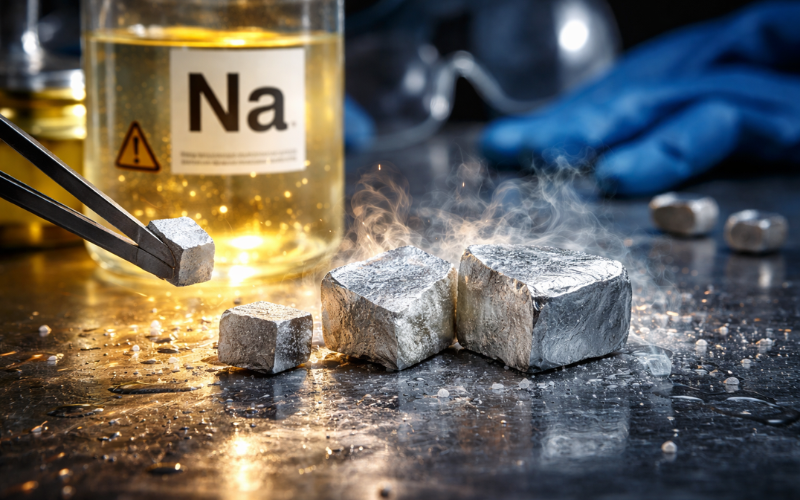
Introduction
Sodium metal Na is a highly reactive chemical element that plays an important role in science, industry, and education. While many people are familiar with sodium as part of table salt, sodium metal Na is very different in form and behavior. Readers usually want to understand what sodium metal Na actually is, how it behaves, why it is useful, and why it must be handled with care. This article explains those points clearly and simply, using plain language and real-world context.
What Sodium Metal Na Is and How It’s Classified
Sodium metal Na is the pure metallic form of the element sodium. It is a naturally occurring element found in the Earth’s crust, but never in its free metallic state because it reacts very quickly with other substances. In nature, sodium is usually combined with chlorine or other elements to form stable compounds.
In its metallic form, sodium metal Na is soft, shiny, and silvery when freshly cut. It can be sliced with a knife and is much lighter than many people expect. What makes sodium metal Na stand out is how easily it reacts, especially with air and water. Because of this reactivity, it is carefully produced, stored, and used under controlled conditions.
Why Sodium Is Considered an Alkali Metal
Sodium metal Na belongs to a group of elements known as alkali metals. These elements share similar chemical behavior, including high reactivity and a tendency to form strong reactions with water. Sodium fits this classification because it has a single outer electron that it easily gives up during chemical reactions. This simple structure explains why sodium metal Na reacts so quickly and why it forms compounds so easily.
Physical and Chemical Properties of Sodium Metal Na
Sodium metal Na has several unique physical and chemical properties that make it easy to recognize and important in science. Physically, it is soft enough to cut with a blade and has a low melting point compared to most metals. It appears shiny at first, but that shine fades quickly when exposed to air due to surface reactions.
Chemically, sodium metal Na is extremely reactive. It does not stay in its pure form for long unless protected. It reacts readily with oxygen, moisture, and many other substances. This high reactivity is not a flaw but a defining feature that makes sodium metal Na useful in controlled chemical processes.
How Sodium Metal Na Reacts With Air and Water
When sodium metal Na is exposed to air, it slowly reacts with oxygen and moisture, forming a dull coating on its surface. This reaction is mild compared to what happens with water. When sodium metal Na comes into contact with water, it reacts violently, producing heat, hydrogen gas, and a strong alkaline solution. In some cases, the heat can ignite the hydrogen, creating flames or explosions. This reaction is one of the main reasons sodium metal Na is handled so carefully.
How Sodium Metal Na Is Produced and Stored
Sodium metal Na is produced industrially through controlled chemical processes that separate sodium from its compounds. These processes require high temperatures and specialized equipment to prevent unwanted reactions. Once produced, sodium metal Na must be kept away from air and water at all times.
Storage is usually done by placing sodium metal Na under oil or in sealed containers filled with inert gas. These methods prevent contact with moisture and oxygen, helping maintain stability during transport and storage.
Why Special Storage Condit#ions Are Required
Special storage conditions are necessary because sodium metal Na reacts with even small amounts of water vapor in the air. Without protection, it can corrode, generate heat, or become dangerous. Keeping sodium metal Na isolated ensures safety and preserves its usefulness for scientific and industrial applications.
Common Uses of Sodium Metal Na in Industry and Science
Despite its risks, sodium metal Na is widely used because of its strong chemical activity. It is valuable in industries that require controlled reactions and precise chemical outcomes. Sodium metal Na is also used in research laboratories to demonstrate chemical principles and reaction behavior.
In industrial settings, sodium metal Na is used to produce other chemicals, refine metals, and support specialized manufacturing processes. Its ability to transfer electrons efficiently makes it useful in reactions that other materials cannot easily perform.
Role of Sodium Metal Na in Chemical Manufacturing
In chemical manufacturing, sodium metal Na is used as a starting material or reaction agent to create important compounds. It helps drive reactions that require strong reducing power. Because sodium metal Na reacts predictably under controlled conditions, it is trusted in carefully designed industrial systems.
Safety Risks and Handling Concerns of Sodium Metal Na
Sodium metal Na is considered hazardous if handled incorrectly. Its reactivity means that even small mistakes can lead to fires, burns, or explosions. Direct contact with skin can cause severe chemical burns, especially if moisture is present.
For this reason, sodium metal Na is handled only by trained professionals using protective equipment. Safety procedures focus on keeping the metal dry, preventing exposure to air, and controlling reactions carefully.
What Happens When Sodium Metal Na Is Mishandled
When sodium metal Na is mishandled, it can react unexpectedly. Contact with water can cause sudden heat release and fire. Exposure to air over time can weaken storage containers or create unstable surfaces. These risks highlight why strict safety rules exist and why sodium metal Na is not suitable for casual or untrained handling.
Environmental and Laboratory Considerations of Sodium Metal Na
From an environmental perspective, sodium metal Na must be disposed of responsibly. It cannot simply be thrown away because of its reactivity. Laboratories and industrial facilities follow regulated procedures to neutralize sodium metal Na safely before disposal.
In laboratory settings, sodium metal Na is used in small amounts under controlled conditions. Clear labeling, proper training, and emergency plans are essential. These practices ensure that sodium metal Na can be used productively without unnecessary risk to people or the environment.
Conclusion
Sodium metal Na is a powerful and fascinating element with unique properties that make it both useful and dangerous. Its classification, behavior, production methods, and applications all reflect its highly reactive nature. By understanding how sodium metal Na works and why strict safety measures are necessary, readers can better appreciate its role in science and industry. When handled responsibly, sodium metal Na remains an essential material in modern chemical processes.
FAQs
1. Is sodium metal Na the same as table salt?
No, sodium metal Na is very different from table salt. Table salt is a stable compound made from sodium and chlorine, while sodium metal Na is a pure, highly reactive metal.
2. Why does sodium metal Na explode in water?
Sodium metal Na reacts rapidly with water, releasing heat and hydrogen gas. The heat can ignite the gas, causing flames or explosions.
3. Can sodium metal Na be handled by hand?
No, sodium metal Na should never be handled by bare hands. Moisture on the skin can trigger dangerous reactions.
4. Where is sodium metal Na commonly used today?
Sodium metal Na is used in chemical manufacturing, research laboratories, and specialized industrial processes where controlled reactions are required.