 By Admin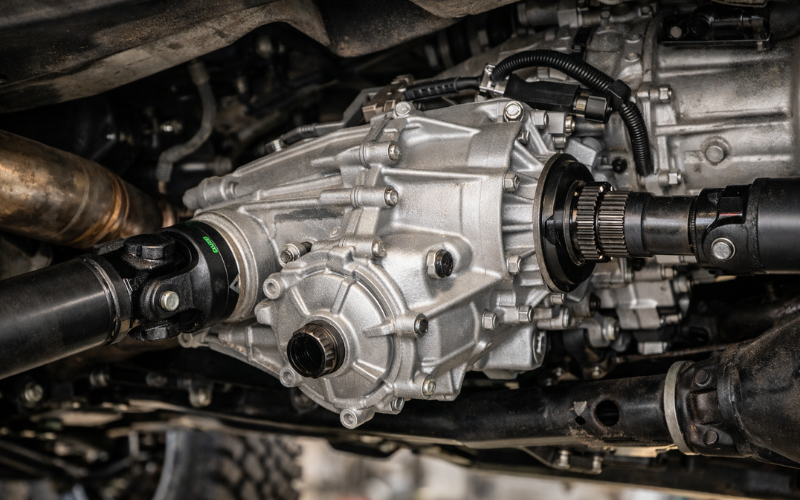
Introduction
Modern vehicles are designed to handle a wide range of driving conditions, from smooth highways to rough and slippery roads. One important but often overlooked part that makes this possible is the transfer case. While many drivers focus on engines and transmissions, the transfer case quietly plays a major role in how power is delivered to the wheels. Understanding what a transfer case does and why it matters helps drivers make better decisions about vehicle use, maintenance, and long-term reliability.
What a Transfer Case Is and Why It Exists
A transfer case is a drivetrain component found mainly in vehicles that drive more than one axle. Its main job is to take power from the transmission and send it to both the front and rear axles when needed. Without a transfer case, a vehicle would only be able to drive one set of wheels.
It is important not to confuse the transfer case with the transmission or the differential. The transmission controls gear ratios and speed, helping the vehicle move efficiently at different speeds. The differential allows wheels on the same axle to rotate at different speeds while turning. The transfer case sits between these systems and manages how power is shared across axles.
Not all vehicles need a transfer case. Front-wheel-drive and rear-wheel-drive vehicles usually send power to only one axle, so a transfer case is unnecessary. Vehicles designed for off-road driving, towing, snow, or uneven terrain often require a transfer case to improve traction and control. This is why transfer cases are commonly found in trucks, SUVs, and some crossovers.
How a Transfer Case Distributes Power Between Axles
The transfer case works by receiving rotational power from the transmission and redirecting it to two driveshafts instead of one. One driveshaft sends power to the front axle, while the other sends power to the rear axle. This shared power allows all wheels to contribute to movement, improving grip and stability.
Inside the transfer case, gears or chains move power smoothly between components. In simple terms, the transfer case decides when and how much power goes to each axle. Some systems send power evenly, while others adjust automatically based on road conditions.
Torque distribution is a key function of the transfer case. When one axle starts to lose traction, the transfer case can redirect power to the axle with better grip. This ability becomes especially important during rain, snow, mud, or when driving on loose surfaces where traction changes quickly.
Different Types of Transfer Case Designs Used Today
Transfer cases come in several designs, each built for different driving needs. Part-time transfer cases allow drivers to switch between two-wheel drive and four-wheel drive manually. These systems are common in off-road vehicles because they provide strong traction when needed and better fuel efficiency when four-wheel drive is not required.
Full-time transfer cases send power to both axles at all times. They are designed for constant traction and smooth handling, especially on mixed road surfaces. These systems are often used in vehicles that must remain stable in changing weather conditions without driver input.
Electronic and on-demand transfer cases rely on sensors and computers to decide when to send power to the front or rear axle. These systems improve comfort and ease of use by adjusting automatically. The design choice directly affects how a vehicle feels while driving, how it responds to slippery roads, and how much control the driver has over drivetrain behavior.
Transfer Case Use in Four-Wheel Drive and All-Wheel Drive Systems
In four-wheel drive systems, the transfer case is essential. It allows the driver to engage four-wheel drive when extra traction is needed, such as on dirt roads, snow, or steep terrain. The transfer case ensures that both axles receive power, helping the vehicle move forward even when one set of wheels loses grip.
All-wheel drive systems also depend on a transfer case, though the operation is often more automatic. Instead of manual engagement, the transfer case continuously manages power distribution based on speed, wheel slip, and driving conditions. This makes all-wheel drive ideal for everyday driving in areas with frequent rain or snow.
Real-world situations highlight the importance of a transfer case. Climbing steep hills, towing heavy loads, driving on icy roads, or navigating uneven trails all place extra demand on the drivetrain. In these moments, the transfer case becomes a critical component that keeps the vehicle stable and responsive.
Common Transfer Case Problems and Early Warning Signs
Like any mechanical component, a transfer case can wear out over time. Early signs of trouble often include unusual noises such as grinding, humming, or clunking sounds when driving or shifting. Vibrations felt through the vehicle may also indicate internal wear.
Shifting problems are another common warning sign. Difficulty engaging four-wheel drive, delayed response, or unexpected disengagement can point to transfer case issues. Fluid leaks are also a serious concern. Transfer case fluid is essential for lubrication and cooling, and leaks can lead to rapid damage if ignored.
Transfer Case Maintenance and Long-Term Care
Proper maintenance plays a major role in how long a transfer case lasts. Using the correct fluid type and following recommended service intervals helps prevent overheating and internal damage. Over time, fluid can break down or become contaminated, reducing its ability to protect internal parts.
Regular inspections also help catch small issues before they grow. Ignoring warning lights, driving with low fluid levels, or using the wrong fluid are common mistakes that shorten transfer case life. Gentle driving habits, especially when engaging four-wheel drive, also reduce stress on the system.
When Transfer Case Repair or Replacement Becomes Necessary
In some cases, transfer case problems can be repaired. Replacing seals, sensors, or small internal parts may restore normal operation if the damage is limited. Early diagnosis increases the chances of successful repair.
Replacement becomes the safer option when internal gears or chains are severely worn or damaged. Continuing to drive with a failing transfer case can harm other drivetrain components, increasing repair costs. While replacement can be expensive, it often provides better reliability and peace of mind.
Cost and reliability depend on vehicle type, usage, and maintenance history. Making timely decisions helps balance safety, performance, and long-term value.
Conclusion
The transfer case is a vital part of modern drivetrains, quietly managing how power reaches the wheels. From improving traction to supporting complex drive systems, it plays a key role in vehicle capability and safety. Understanding how a transfer case works, recognizing early warning signs, and maintaining it properly allows drivers to protect their vehicle and enjoy reliable performance in all driving conditions.
FAQs
1. What vehicles are equipped with a transfer case?
A transfer case is usually found in vehicles with four-wheel drive or all-wheel drive systems. This includes most SUVs, pickup trucks, and some crossovers designed for off-road use or extra traction.
2. Can a transfer case affect fuel efficiency?
Yes, a transfer case can impact fuel efficiency. When power is sent to all wheels, the vehicle uses more energy, which may slightly reduce fuel economy compared to two-wheel drive operation.
3. How long does a transfer case typically last?
A transfer case can last 150,000 miles or more if it is properly maintained. Regular fluid changes and careful driving habits help extend its lifespan.
4. Is it safe to drive with a failing transfer case?
Driving with a failing transfer case is not safe. It can cause loss of power to the wheels, poor traction, and damage to other drivetrain components if ignored.