 By Admin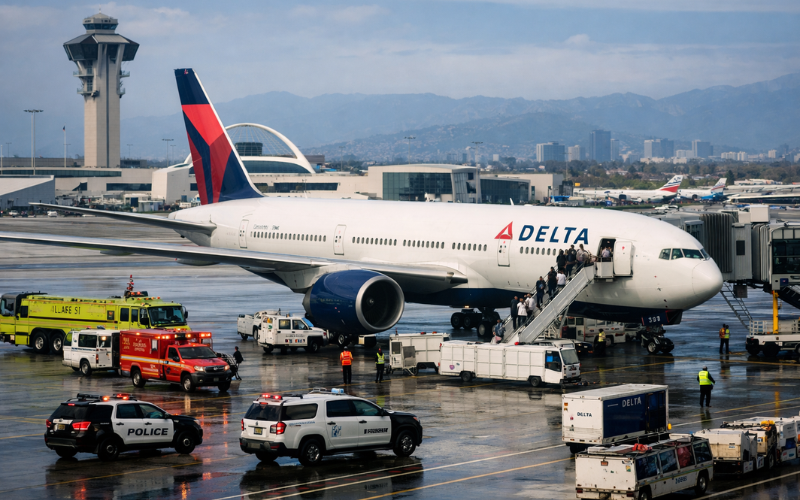
Introduction
The incident involving delta flight dl275 diverted lax quickly caught public attention after the long-haul flight changed course over the Pacific Ocean and headed back toward the United States. The flight, operated by Delta Air Lines, was traveling from Detroit Metropolitan Wayne County Airport to Tokyo Haneda Airport when a technical issue was detected mid-journey. As a precaution, the aircraft was diverted and landed safely in Los Angeles.
The Detroit to Tokyo Haneda route is one of Delta’s important international connections, linking the American Midwest with Japan’s capital. Because it is a long transpacific flight that operates over open ocean for several hours, any diversion naturally raises questions among passengers and aviation observers.
Flight Overview: Route, Aircraft, and Scheduled Journey
Delta flight DL275 regularly operates between Detroit (DTW) and Tokyo Haneda (HND). This is a long-haul international route that crosses the Pacific Ocean and typically takes around 13 to 14 hours, depending on winds and routing conditions. The flight connects business travelers, tourists, and connecting passengers between North America and Asia.
The aircraft assigned to this route was an Airbus A350-900, one of Delta’s most advanced long-range jets. The A350 is designed specifically for long-distance travel and is widely used for transpacific operations due to its fuel efficiency, extended range capability, and modern onboard systems. It is built to handle high-altitude cruise conditions and long hours over water.
On the day of the incident, DL275 departed Detroit as scheduled and proceeded along its planned westbound path across North America before heading out over the Pacific. For the first several hours, the flight progressed normally.
What Triggered the Diversion Over the Pacific
The situation changed after approximately five hours of flight time. While cruising over the Pacific Ocean, the crew detected a malfunction involving the engine anti-ice system. This system plays a crucial role in preventing ice buildup on engine components during high-altitude flight, where temperatures are extremely low.
Ice formation can interfere with airflow and engine performance if not properly managed. The anti-ice system ensures that critical parts of the engine remain clear of ice during flight. Even though modern aircraft are built with multiple layers of protection and redundancy, any issue involving engine systems is taken seriously.
In this case, the malfunction did not result in an emergency, but it required precautionary action. Commercial aviation operates under strict safety rules, and when a system that supports engine performance does not function as expected, the safest option is often to divert to a suitable airport for inspection. That is why delta flight dl275 diverted lax rather than continuing across the Pacific toward Tokyo.
Why Los Angeles (LAX) Was Chosen Instead of Closer Airports
When delta flight dl275 diverted lax, some observers wondered why Los Angeles was selected instead of airports that appeared closer on the map, such as Anchorage in Alaska. The decision was based on operational and technical factors.
Los Angeles International Airport is a major Delta hub and has extensive maintenance facilities capable of handling wide-body aircraft like the Airbus A350. Not all airports are equipped with the specialized tools, certified technicians, and spare parts required to inspect and repair advanced long-haul jets.
Although Anchorage may have been geographically closer at certain points, Los Angeles offered stronger technical support and logistical resources. Choosing LAX ensured that the aircraft could receive proper inspection and maintenance without unnecessary delay.
How the Crew Managed the Situation in Real Time
Once the anomaly was detected, the pilots followed standard operating procedures. They assessed the system alert, reviewed aircraft performance, and consulted with Delta’s operations team on the ground. Communication between the cockpit, air traffic control, and the airline’s dispatch center is continuous during such situations.
After evaluating the conditions, the crew initiated a controlled 180-degree turn back toward North America. Throughout the process, the flight remained stable and under full control. There were no reports of panic or emergency conditions onboard.
Passengers were informed that the aircraft would be diverting due to a technical issue. Transparency during in-flight situations helps maintain calm and allows travelers to understand that safety is the priority. The aircraft then proceeded toward Los Angeles and landed safely.
Passenger Experience After Delta Flight DL275 Diverted to LAX
After landing at LAX, passengers disembarked and were assisted by Delta ground staff. Because the flight was unable to continue to Tokyo that same day, many travelers required rebooking on alternative flights.
Delta provided support in line with its customer service policies. This included helping passengers secure new travel arrangements to Tokyo Haneda or other connecting destinations. For those who needed to stay overnight, hotel accommodations and meal vouchers were arranged.
While unexpected diversions can disrupt travel plans, there were no reported injuries, and passengers were safely guided through the rebooking process. For many travelers, the focus shifted from concern about the diversion to managing new departure times and itineraries.
Aircraft Inspection, Repairs, and Return to Service
Following the safe landing, the aircraft underwent a thorough inspection at Los Angeles. Maintenance technicians examined the engine anti-ice system and related components to identify the exact cause of the malfunction.
Aircraft maintenance procedures are detailed and highly regulated. Before any wide-body jet returns to service, engineers must confirm that all systems meet safety and operational standards. This includes testing affected systems, reviewing diagnostic data, and verifying that repairs are properly completed.
Only after these checks are finished and documented can the aircraft be cleared to operate again. According to available updates, the aircraft involved in delta flight dl275 diverted lax was inspected and prepared for return to service following maintenance work at LAX.
Safety Protocols Behind Long-Haul Flight Diversions
Diversions are not unusual in commercial aviation, especially on long-haul routes that cross oceans. Airlines plan for alternate airports before departure and continuously monitor systems throughout the journey.
When a system issue arises, even if it does not pose an immediate threat, precautionary diversion is often the safest choice. Aviation is built on layered safety standards, and airlines prefer to address potential problems on the ground rather than take unnecessary risks.
The case of delta flight dl275 diverted lax highlights how airlines prioritize safety over schedule. Although delays and rerouting can inconvenience passengers, the decision to divert reflects a commitment to strict operational standards.
Latest Updates on Delta Flight DL275 Diverted to LAX
Recent updates indicate that the aircraft landed safely and that no injuries were reported among passengers or crew. The diversion was described as precautionary, and Delta worked to rebook affected travelers.
After inspection and necessary maintenance at Los Angeles, the aircraft was prepared for continued operations. Delta has emphasized that safety remains its top priority in all situations.
For travelers monitoring delta flight dl275 diverted lax, checking Delta’s official flight status page or contacting customer service provides the most accurate and up-to-date information regarding rescheduled departures.
Conclusion
The event involving delta flight dl275 diverted lax serves as a reminder of how modern aviation systems are designed to detect even minor technical issues and respond quickly. What began as a routine transpacific flight from Detroit to Tokyo became a precautionary diversion to Los Angeles after an engine anti-ice system malfunction was identified.
The crew followed established safety procedures, the aircraft landed without incident, and passengers were supported with rebooking and accommodations. While diversions can be disruptive, they are also evidence of the strict safety culture that governs international air travel.
FAQs
1. Why was Delta flight DL275 diverted to LAX?
Delta flight DL275 was diverted due to a malfunction in the engine anti-ice system. As a precaution, the crew chose to land at Los Angeles for inspection and maintenance.
2. Were there any injuries on Delta flight DL275?
No injuries were reported among passengers or crew when delta flight dl275 diverted lax and landed safely at Los Angeles International Airport.
3. Why didn’t the flight continue to Tokyo after the issue was detected?
Because the issue involved an engine-related system, continuing across the Pacific would not have been the safest option. Diverting allowed the aircraft to be inspected on the ground.
4. How were passengers affected by the diversion?
Passengers were assisted with rebooking, and those requiring overnight stays were provided with hotel accommodations and meal vouchers according to Delta’s policies.