 By Admin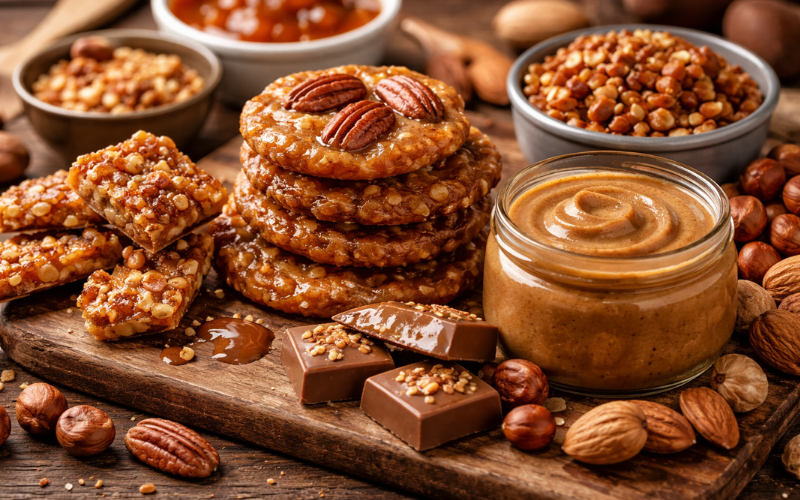
Introduction
Praline is a sweet treat that has captured the hearts of dessert lovers around the world. At its core, praline is a confection made from sugar and nuts, often enjoyed on its own or used to add rich flavor to other desserts. While the word “praline” may sound simple, it carries different meanings depending on where you are and how it is used. Today, praline is known not just as a candy but also as a flavor, a filling, and an ingredient that brings warmth and sweetness to many recipes. Its long history and wide appeal make it a fascinating part of global food culture.
Understanding What Praline Really Is
In the most basic sense, praline refers to a sweet preparation made by cooking sugar with nuts until the mixture becomes caramelized. Once cooled, it can be eaten as a candy or ground into a paste or powder for other uses. In food and confectionery contexts, praline is valued for its deep, nutty taste and slightly caramel-like sweetness. Depending on the region, the texture of praline can range from firm and crunchy to smooth and creamy. Despite these variations, the common thread is the balance between sugar and nuts, which defines what praline truly is.
The Origins and Evolution of Praline
The story of praline begins in Europe, where it first appeared as a simple combination of sugar and almonds. Over time, the idea traveled across borders and oceans, evolving as it met new ingredients and traditions. In France, praline became refined and was often used as a base for elegant desserts. When it reached North America, especially in the southern United States, it took on a new identity with the use of local nuts and a softer texture. As cultures adapted the concept to their tastes, praline transformed from a single candy into a broad category of sweets with shared roots.
Different Types of Praline Around the World
Praline appears in several well-known forms around the world. Each type has its own identity, texture, and way of being enjoyed, while still staying true to the classic combination of sugar and nuts.
French Praline
French praline is one of the earliest and most refined forms. It is usually made by caramelizing almonds or hazelnuts and then grinding them into a smooth paste or fine powder. This type of praline is rarely eaten on its own. Instead, it is widely used as a filling in chocolates, pastries, and desserts, where it adds deep nutty flavor and richness.
Belgian Praline
Belgian praline is closely linked to chocolate making. In this style, praline often refers to chocolates filled with a nut-based praline cream or paste. The outer chocolate shell and soft praline filling work together to create a smooth and luxurious dessert experience.
American Praline (Southern Praline)
American praline, especially popular in the southern United States, is softer and creamier compared to European versions. It is usually shaped into small round or flat candies and enjoyed as a standalone sweet. This type focuses more on a melt-in-the-mouth texture and comforting sweetness.
Crunchy Nut Praline
In many regions, praline is prepared as a hard, crunchy candy. Whole or chopped nuts are coated in caramelized sugar and allowed to cool until firm. This type highlights crisp texture and bold caramel flavor and is often eaten as a simple treat or used as a topping in desserts.
Key Ingredients That Define Praline
The identity of praline comes from a small number of essential ingredients. Sugar is the foundation, providing sweetness and structure once it melts and caramelizes. Nuts are the heart of the flavor, adding richness and depth. The type of nut used can greatly change the taste, making each version of praline unique. In some variations, dairy ingredients are added to create a smoother texture and a milder sweetness. Together, these components work in harmony to give praline its well-known character.
How Praline Is Made
Making praline is a process that relies on timing and careful attention. Sugar is heated until it melts and begins to change color, signaling the start of caramelization. Nuts are then added and coated in the hot sugar, allowing their natural oils and flavors to blend with the sweetness. The mixture is spread out to cool, where it hardens or sets into its final form. In some cases, the cooled praline is further processed by grinding or mixing, depending on how it will be used. While the steps are simple, the technique plays a big role in the final taste and texture.
Texture, Flavor, and Appearance of Praline
One of the most appealing aspects of praline is its sensory experience. The texture can be crisp and crunchy or smooth and creamy, depending on how it is prepared. The flavor combines the sweetness of caramelized sugar with the natural taste of nuts, creating a balance that feels rich but not overwhelming. Visually, praline often has a warm, golden-brown color that reflects its caramel base. These qualities make praline instantly recognizable and enjoyable in many forms.
Praline in Modern Desserts and Sweets
In today’s food world, praline goes far beyond being a simple candy. It is commonly used as a filling for chocolates, a topping for pastries, or a flavoring in ice creams and cakes. Chefs and bakers appreciate praline for its ability to add both sweetness and texture to desserts. Its versatility allows it to fit into classic recipes as well as modern creations. Whether used sparingly or as a main feature, praline continues to inspire new ways of enjoying sweet treats.
Common Misunderstandings About Praline
Despite its popularity, praline is often misunderstood. Some people think it refers to only one specific type of candy, while others confuse it with similar nut-based sweets. Pronunciation can also vary, leading to uncertainty about how the word should sound. Additionally, the spelling of praline sometimes causes confusion, especially when different regions use the term in slightly different ways. Clearing up these misunderstandings helps people better appreciate the true range and meaning of praline.
Why Praline Remains Popular Today
Praline has remained popular because it offers comfort, tradition, and flavor all at once. Its simple ingredients make it familiar, while its many variations keep it interesting. As food trends change, praline continues to adapt, finding a place in both traditional and modern desserts. People are drawn to its rich taste and the sense of warmth it brings. This lasting appeal ensures that praline remains a favorite in kitchens and bakeries around the world.
Conclusion
Praline is more than just a sweet treat; it is a confection with history, variety, and lasting charm. From its early beginnings to its modern uses, praline has shown an ability to evolve while staying true to its core identity. Its balance of sugar and nuts creates a flavor that feels both simple and indulgent. Whether enjoyed on its own or as part of a dessert, praline continues to delight people of all ages. This versatility and timeless appeal explain why praline holds a special place in the world of sweets.
FAQs
1. What is praline made of?
Praline is mainly made from sugar and nuts. The sugar is heated until it caramelizes, and the nuts are added to create a rich, sweet flavor. Some versions may also include dairy ingredients to make the texture softer or creamier.
2. Is praline the same everywhere in the world?
No, praline can be quite different depending on the region. In some places, it is a hard and crunchy candy, while in others it is soft, creamy, or even used as a paste in desserts. Despite these differences, the combination of sugar and nuts remains the key feature.
3. What does praline taste like?
Praline has a sweet, nutty flavor with light caramel notes. The taste is rich but balanced, combining the natural flavor of nuts with the sweetness of cooked sugar. Its texture can change the experience, but the warm, comforting flavor stays consistent.
4. How is praline commonly used today?
Today, praline is used in many desserts, including chocolates, pastries, ice creams, and cakes. It can be enjoyed as a candy on its own or used as a filling, topping, or flavoring to add depth and sweetness to modern sweets.