 By Admin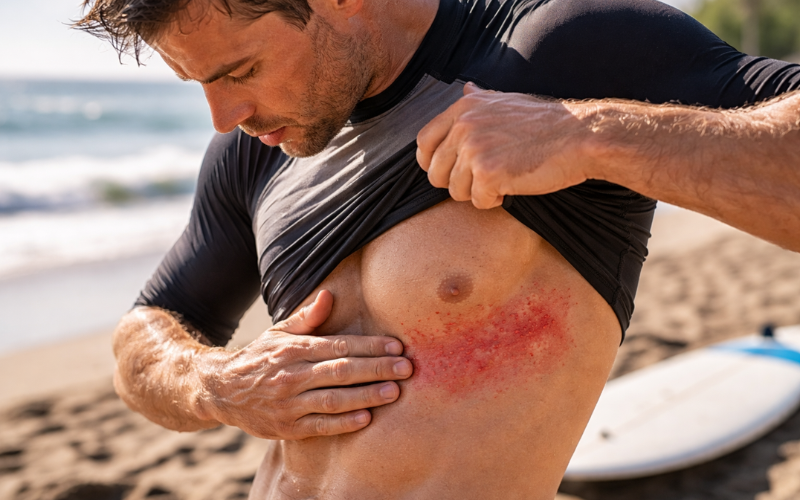
Introduction
Wearing a rash guard is meant to protect your skin during water sports, workouts, or outdoor activities. But sometimes, instead of comfort, it can leave you with an uncomfortable rash. A rash from rash guard can happen for several reasons, including friction, material sensitivity, or moisture trapped against the skin. Understanding why this happens and how to prevent it can help you enjoy your activities without irritation.
Understanding Rash Guard Rashes
A rash from a rash guard is essentially skin irritation caused by contact with the garment. It can appear as redness, small bumps, or itching and may be uncomfortable enough to interfere with sports or swimming. While the irritation is usually mild, it can worsen if ignored or if the rash guard continues to rub against the affected area.
The signs are often easy to notice. Red patches, tiny raised bumps, and a stinging or burning sensation are common. Sometimes, the rash may blister or feel warm to the touch. Recognizing these symptoms early can help prevent more serious irritation or infection.
Why Rash Guards Can Cause Skin Irritation
Several factors can contribute to a rash from a rash guard.
Fabric Types and Sensitivities
Different materials can affect your skin in unique ways. Synthetic fabrics like polyester or spandex are common in rash guards because they dry quickly and provide stretch. However, some people’s skin reacts to these fabrics, especially if they contain dyes or chemical finishes. Natural skin sensitivities can make irritation more likely, even with high-quality gear.
Fit and Friction Issues
A rash guard that is too tight can create constant rubbing against the skin, while one that’s too loose can move excessively, leading to friction. Either extreme can damage the skin’s protective barrier, causing a rash. Friction is especially pronounced during repetitive movements like swimming strokes or grappling in martial arts.
Moisture and Sweat Buildup
Rash guards are designed to trap a thin layer of water or sweat to prevent chafing from direct contact with other surfaces. But if moisture stays trapped for too long, it can soften the skin, making it more prone to irritation. Sweat, salt, or chlorine can also worsen the problem by making the skin more sensitive.
Who Is Most Likely to Get a Rash
While anyone can develop a rash from a rash guard, certain groups are more prone.
Sensitive Skin Types
People with naturally sensitive skin or conditions like eczema may notice rashes more quickly. Even small amounts of friction or chemical exposure can trigger irritation.
Children vs. Adults
Children often have thinner skin and may be more likely to develop rashes from tight or synthetic clothing. Adults with sensitive or aging skin can also experience irritation, especially after long periods of use.
People with Allergies or Skin Conditions
Allergic reactions to detergents, dyes, or fabric treatments are common causes. Individuals with pre-existing skin conditions like psoriasis or dermatitis may notice that a rash guard aggravates these issues.
How to Prevent a Rash from a Rash Guard
Preventing a rash involves choosing the right gear and taking a few simple precautions.
Choosing the Right Fabric and Size
Opt for rash guards made from soft, breathable materials with smooth seams. Ensure the fit is snug but not tight, allowing full movement without excessive friction. Trying different brands and materials can help you find what works best for your skin.
Proper Washing and Care Before First Use
Washing a new rash guard before wearing it removes residual dyes and chemicals that could irritate the skin. Use gentle, fragrance-free detergents and rinse thoroughly to avoid buildup.
Using Barrier Creams or Lotions (If Needed)
Applying a thin layer of a non-irritating barrier cream on areas prone to rubbing can reduce friction and help prevent rashes. This is especially useful for people with sensitive skin or those engaging in extended activities.
Immediate Steps to Take if You Get a Rash
Even with precautions, a rash from a rash guard can still occur. Early care is important.
Cleaning and Soothing the Affected Area
Remove the rash guard and gently wash the skin with mild soap and lukewarm water. Avoid scrubbing, which can worsen irritation. Pat dry carefully and consider applying a cool compress to reduce redness and swelling.
Over-the-Counter Remedies
Topical treatments like hydrocortisone cream or aloe-based gels can help relieve itching and inflammation. Make sure to use products appropriate for your skin type and avoid applying harsh chemicals to sensitive areas.
When to See a Doctor
If the rash persists, spreads, or shows signs of infection such as pus, severe swelling, or intense pain, it’s important to consult a healthcare professional. This ensures proper treatment and prevents complications.
Long-Term Tips for Comfortable Rash Guard Use
Rotating and Alternating Gear
Wearing different rash guards and allowing them to dry fully between uses reduces the chance of repeated irritation. Rotating gear also helps avoid friction in the same areas over time.
Maintaining Hygiene and Skin Health
Regularly washing your rash guard and showering after activities can minimize bacteria and sweat buildup. Keeping skin moisturized and healthy reduces the risk of irritation.
Avoiding Prolonged Wet or Tight Clothing
Sitting in a wet or tight rash guard for extended periods softens the skin and increases friction, which can cause rashes. Change into dry clothing promptly after swimming or workouts.
Myths and Misconceptions About Rash Guards
“Only Cheap Rash Guards Cause Rashes”
Expensive gear isn’t automatically rash-free. Material quality matters, but individual skin reactions can occur with any brand.
“Rashes Mean You Can’t Wear Rash Guards at All”
A rash doesn’t mean you have to give up wearing rash guards. By adjusting fit, fabric, and care practices, most people can continue using them safely.
Conclusion
A rash from a rash guard can be uncomfortable, but understanding the causes and taking simple preventative measures can make a big difference. Choosing the right fit, caring for your gear, and maintaining healthy skin routines can help you enjoy water sports, martial arts, or workouts without irritation. With proper attention, rash guards can remain a comfortable and protective part of your active lifestyle.
FAQs
1. Can a rash guard cause a rash even if it fits well?
Yes. Even properly fitted rash guards can cause irritation if the material or chemical treatments irritate your skin.
2. How long does a rash from a rash guard usually last?
Most mild rashes heal within a few days with proper care, but persistent or severe rashes may require medical attention.
3. Are certain fabrics less likely to cause irritation?
Soft, smooth fabrics like high-quality polyester blends, with minimal seams and gentle finishes, are generally less irritating.
4. Can washing the rash guard in a certain way prevent rashes?
Yes. Using fragrance-free detergents, rinsing thoroughly, and washing new rash guards before the first use can reduce chemical irritation.